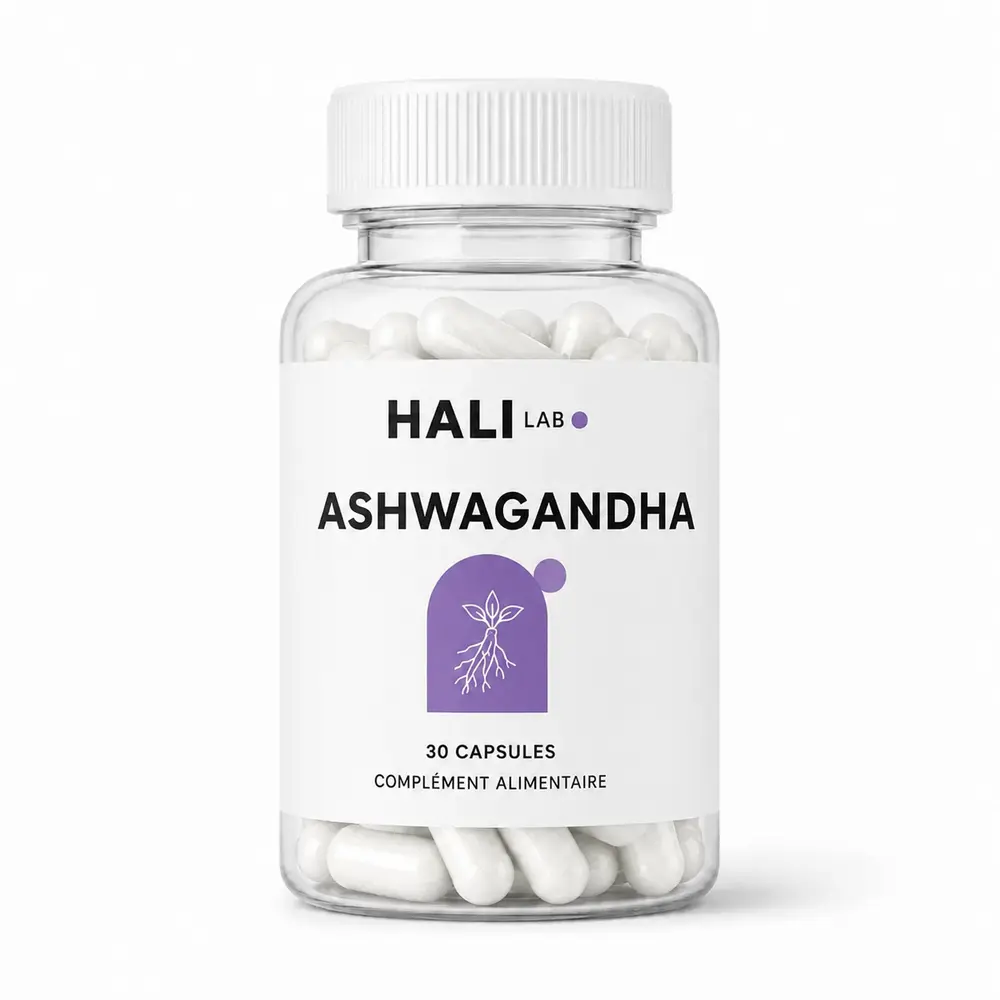
Ashwagandha is increasingly marketed as a supplement “for women,” with claims about libido, hormones, fertility or menopause. These outcomes are not interchangeable. A few clinical trials have tested a specific extract for eight weeks in selected women, but they cannot be generalised to every woman or turn the herb into hormone treatment.
This guide compares the available human data, the populations studied and the limitations. It also explains when caution must come first: pregnancy, breastfeeding, thyroid or autoimmune disease, regular medication, and gynaecological symptoms that need diagnosis. The aim is to help women in Morocco distinguish a research signal from a marketing promise.
Short answer: interesting signals, but still limited evidence
Randomised trials reported improvements in sexual-function questionnaires or climacteric symptoms with certain ashwagandha extracts. However, they were short, enrolled only 50 to 100 participants and relied on self-reported outcomes. A statistical difference in a trial does not guarantee a meaningful benefit for every woman.
NCCIH states that there is not enough reliable evidence to determine whether ashwagandha helps menopause or female infertility. It also recommends avoiding it during pregnancy and not using it while breastfeeding. This overall position should frame interpretation of small positive trials.
Libido: what the 2015 and 2022 trials found
In 2015, a pilot study assigned 50 women to a root extract or placebo for eight weeks. Women taking the extract reported greater improvement in the total FSFI score and several domains, including arousal, lubrication, orgasm and satisfaction. The study involved otherwise healthy women and did not test treatment of a specific medical cause.
In 2022, another trial enrolled 80 women aged 18 to 50 with low sexual-function scores or sexual distress and no known hormonal disorder. After eight weeks, FSFI scores improved in both groups, with a larger improvement under the extract. Reported nausea and drowsiness were comparable with placebo. These findings concern one standardised extract and a selected group; they do not prove that any product treats every cause of low desire.
Female libido cannot be reduced to one herb or hormone
Desire and sexual comfort can be affected by stress, sleep, relationships, pain, dryness, contraception, the postpartum period, medication, depression, anxiety or illness. A research questionnaire measures an overall change; it does not automatically identify the cause for one individual.
Pain during sex, bleeding, persistent dryness, a sudden fall in desire or significant distress should be discussed with a doctor or midwife. Marketing ashwagandha as a “female booster” may delay assessment of a problem that could be treated more appropriately.
Perimenopause and menopause: two positive but short trials
The 2021 trial enrolled 100 women with mild to moderate perimenopausal symptoms, of whom 91 completed eight weeks. The extract group showed greater improvement in MRS and MENQoL scores and changes in estradiol, FSH and LH compared with placebo. There was no significant difference in testosterone.
A study published on 5 January 2026 assigned 60 menopausal women aged 45 to 55 to an extract or placebo for 56 days. It reported improvements in symptoms, hot flashes and several hormone markers. The studied extract was supplied by its manufacturer, although the authors declared no funding and no commercial conflict. The sample size, duration and exclusion of many comorbidities limit generalisation.
“Hormone balance” is an overly vague marketing phrase
Changes in estradiol, FSH or LH in a trial do not show that ashwagandha “balances hormones” in every woman. These hormones naturally vary with age, the menstrual cycle and the menopausal transition. Interpretation depends on clinical context and is not simply a matter of seeking a higher or lower value.
Irregular periods, unusual bleeding, severe hot flashes or persistent symptoms may require assessment. Ashwagandha does not replace investigation of causes, non-hormonal options or menopausal hormone therapy when appropriate after discussion of benefits and risks.
Fertility, PCOS and cycles: do not extrapolate the trials
Trials on libido or menopause did not demonstrate improved ovulation, polycystic ovary syndrome, pregnancy rates or live births. NCCIH concludes that evidence is insufficient for female infertility. A change in a hormone marker is not a fertility outcome.
When trying to conceive, facing very irregular cycles or infertility, assessment may involve both partners and depends on age and time trying. Delaying it to test multiple supplements can waste valuable time. Tell the clinician about every product used, including non-prescription ones.
Pregnancy and breastfeeding: ashwagandha should be avoided
The positive trials cited did not include pregnant or breastfeeding women. NCCIH recommends avoiding ashwagandha during pregnancy and not using it while breastfeeding. Lack of reliable trials does not mean the product is safe; it means effects on pregnancy, the fetus and the infant are unknown.
If pregnancy begins during use, stop the supplement and tell the doctor or midwife the exact product, labelled dose and dates of use. This does not mean harm has necessarily occurred; it allows an individual assessment without minimising the exposure.
Thyroid, autoimmune disease and medicines: check before buying
NCCIH advises against ashwagandha for people with thyroid or autoimmune disorders and notes possible interactions with thyroid hormones, immunosuppressants, sedatives, anticonvulsants and some diabetes or blood-pressure medicines. A woman receiving treatment should not add the supplement without medical or pharmacist review.
In Morocco, bring a clear label photo when seeking advice: plant part, amount per serving, standardisation, other actives and full ingredient list. Trial doses are not personal instructions, and two extracts with the same name are not necessarily equivalent. Avoid adverts promising to treat infertility, replace gynaecological care or “fix” hormones.
This content is educational and does not replace professional medical advice. Seek medical advice before supplementation if symptoms persist, during pregnancy or breastfeeding, or when taking medication or living with a chronic condition.
Frequently asked questions
Does ashwagandha increase libido in women?
Two small eight-week trials observed greater improvement in sexual-function scores with a specific extract. They cannot guarantee an individual effect or treat every cause of low desire.
Does ashwagandha help during menopause?
Two short trials reported symptom improvements in selected women. NCCIH still considers the overall evidence insufficient, and these findings do not replace assessment or established treatments.
Can ashwagandha be taken during pregnancy?
No. NCCIH recommends avoiding it during pregnancy. If you used it before discovering the pregnancy, stop and report the exposure to your doctor or midwife.
Does ashwagandha improve female fertility or PCOS?
Available data do not demonstrate improved ovulation, PCOS, pregnancy or live births. NCCIH considers the evidence insufficient for female infertility.
Can ashwagandha be taken while breastfeeding?
NCCIH says it should not be used while breastfeeding because reliable safety data for mother and infant are lacking.
Educational content: this is not a diagnosis or prescription and does not replace professional healthcare advice.
Sources
- Dongre et al. — étude pilote sur la fonction sexuelle féminine (2015)
- Ajgaonkar et al. — essai randomisé sur la santé sexuelle féminine (2022)
- Gopal et al. — essai sur les symptômes de périménopause (2021)
- Vani et al. — essai sur les symptômes de ménopause, publié le 5 janvier 2026
- NCCIH — Ashwagandha : utilité, sécurité et populations à risque