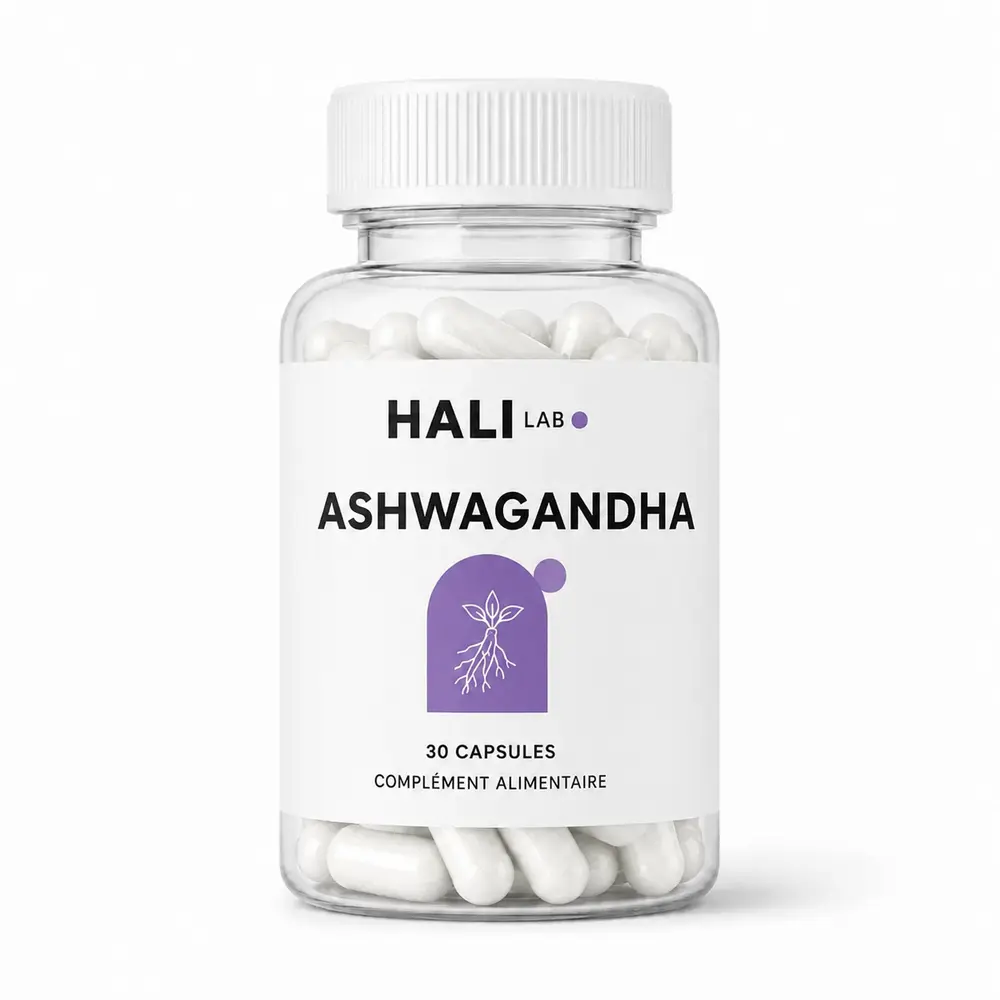
Ashwagandha is often marketed as a “natural testosterone booster,” but that commercial phrase oversimplifies a limited evidence base. A few human trials measured hormonal increases in specific groups, while a randomised trial published in February 2026 found no statistically significant difference between the extract and placebo for total or free testosterone.
This guide addresses a practical question: can ashwagandha be expected to increase testosterone, libido or fertility? It compares the populations studied, the results and their limitations without turning experimental doses into personal advice. In Morocco, as elsewhere, symptoms compatible with hormonal deficiency require medical assessment, not self-diagnosis based on advertising.
Short answer: a possible signal, not a proven treatment
Some controlled trials observed an increase in testosterone after several weeks with a standardised extract. Yet there are few studies, sample sizes are modest and participants differ substantially: overweight men with fatigue, stressed adults, resistance-trained men, or men attending a fertility centre. A result in one group does not automatically apply to all men.
NCCIH, part of the US National Institutes of Health, describes only limited evidence suggesting that two to four months of use may increase testosterone and some sperm measures. It does not present ashwagandha as a treatment for testosterone deficiency, erectile dysfunction or infertility.
Testosterone, libido and fertility are not the same outcome
A change on a hormone test does not prove that someone will gain energy, sexual desire, strength or fertility. Libido is also shaped by stress, sleep, relationships, mental health, medication and many medical causes. Male fertility requires a broader assessment, including semen analysis interpreted by a professional.
A value within the normal range must also be distinguished from true hypogonadism. Diagnosis is not based on one symptom or a single blood test taken at an arbitrary time. Ashwagandha therefore does not replace consultation, properly conducted testing or prescribed treatment when indicated.
The 2019 trial: a hormonal rise without clear symptom benefit
A randomised crossover trial enrolled 57 overweight men aged 40 to 70 with mild fatigue. Each eight-week period compared a standardised extract with placebo. Fifty participants completed the first period and 43 completed the full protocol. The extract was associated with a 14.7% greater rise in salivary testosterone and an 18% greater rise in DHEA-S than placebo.
However, the trial found no significant advantage over placebo for fatigue, vigour or sexual well-being. It measured salivary testosterone in a selected population, and the final sample was small. It provides a hormonal signal to replicate, not a guarantee of clinical improvement.
The 2023 trial: a positive result in a male subgroup
A 12-week study assigned 120 adults aged 40 to 75 with overweight or mild obesity and self-reported stress and fatigue to 400 mg daily of a standardised extract or placebo. In the male subgroup, researchers observed greater increases in free testosterone and luteinising hormone than with placebo.
These hormones were secondary outcomes, and the study was not designed as a treatment trial for testosterone deficiency. Concentrations remained within normal ranges, and the findings do not show that a man with a diagnosed hormonal disorder would experience the same effect. The authors themselves called for more robust trials.
The 2026 trial strongly qualifies the “booster” claim
The most recent trial followed 76 men aged 30 to 50 for eight weeks: 300 mg of extract twice daily or placebo. The authors reported improvements in several sexual-function scores and semen measures. By contrast, between-group differences were not statistically significant for total testosterone (p = 0.223) or free testosterone (p = 0.099).
That distinction matters: a value can rise within one group without the difference versus placebo being sufficiently robust. The study was short, single-context, modest in size and did not formally quantify lifestyle factors. Replication is needed before turning it into a general claim about libido, fertility or hormones.
Why study doses are not personal dosing advice
Trials did not use one interchangeable product: plant origin, plant part, extraction method and withanolide concentration varied. Two bottles displaying the same milligram amount can therefore contain different preparations. Copying a study dose without knowing the product’s actual standardisation is not a reliable comparison.
Duration is another limitation. Most signals come from eight to twelve weeks, while long-term safety remains insufficiently documented. A safer approach is to follow the validated label, avoid stacking multiple supplements with claimed hormonal effects, and tell a doctor or pharmacist about their use.
When to seek an assessment instead of a booster
Persistent fatigue, a sustained fall in desire, erectile difficulties, reduced strength or fertility concerns can have many causes. Poor sleep, sleep apnoea, depression, excess weight, diabetes, thyroid disease, medicines and relationship difficulties are among the possibilities. Masking the issue with a supplement can delay useful care.
A professional can decide whether hormone testing is appropriate, choose the correct sampling time and interpret the result alongside symptoms and medical history. Sudden erectile dysfunction, pain, a testicular lump or significant symptoms require consultation, not a self-directed ashwagandha trial.
Specific precautions before supplementation
According to NCCIH, ashwagandha may cause drowsiness, stomach upset, diarrhoea or vomiting, and rare cases of liver injury have been reported. It should be avoided during pregnancy and breastfeeding, before surgery, and in some autoimmune or thyroid disorders without medical advice.
Interactions are possible with diabetes or blood-pressure medicines, immunosuppressants, sedatives, anticonvulsants and thyroid hormone medication. Because ashwagandha may influence testosterone, NCCIH also recommends avoiding it in hormone-sensitive prostate cancer. These precautions still apply when a product is described as natural.
Key takeaways
Human research provides some positive testosterone signals, but it does not demonstrate a reliable effect in every man. The 2026 trial is especially informative: it reported several favourable sexual outcomes while finding no significant difference versus placebo for total or free testosterone.
The reasonable conclusion is neither “it never works” nor “it definitely boosts hormones.” It remains an uncertain possibility that depends on the extract and population. Hormonal, sexual or fertility concerns deserve an appropriate diagnosis; a supplement should not delay that assessment.
Frequently asked questions
Does ashwagandha really increase testosterone?
Some small trials observed an increase in selected populations, but findings are not consistent. In 2026, a trial in 76 men found no statistically significant difference versus placebo for total or free testosterone.
Can it replace testosterone treatment?
No. Trials did not evaluate ashwagandha as a replacement for medical treatment in men with diagnosed hypogonadism. Suspected deficiency requires clinical and laboratory assessment.
Are libido, fertility and testosterone the same thing?
No. A hormonal increase guarantees neither improved desire nor pregnancy. Libido and fertility depend on many factors and require different assessments.
How long did the studies last?
The main trials cited lasted eight to twelve weeks. This does not establish safety or effectiveness beyond that period and is not a personalised course duration.
Educational content: this is not a diagnosis or prescription and does not replace professional healthcare advice.