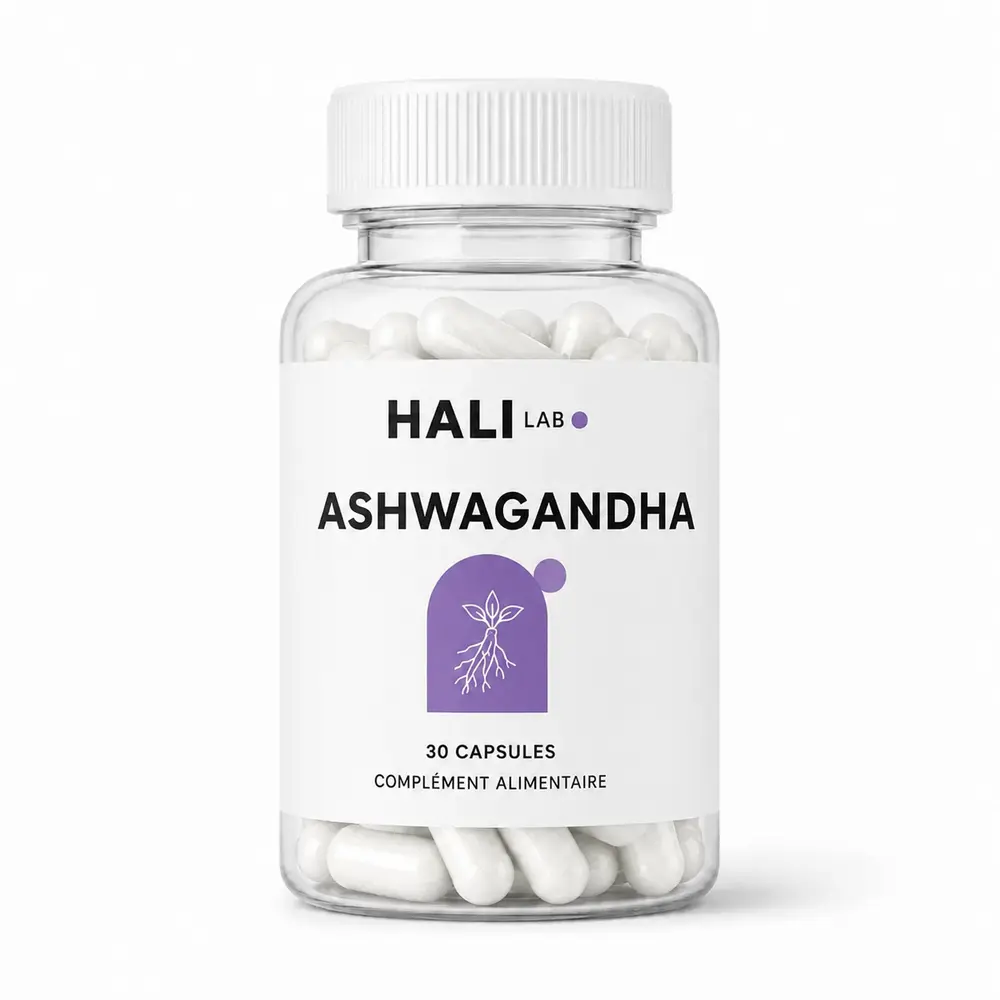
Ashwagandha is sometimes marketed as a “natural nootropic” that improves memory, concentration or intellectual performance. That commercial phrase goes beyond the evidence. A few randomised trials have observed differences on selected cognitive tests, but they studied specific extracts for short periods in very different groups: adults with mild cognitive impairment, stressed people or healthy young adults.
This guide separates memory, attention, processing speed and executive function, then examines what human studies actually show. It also explains why an improvement on a test does not mean that a product prevents Alzheimer’s disease, treats memory disorders or makes someone “smarter.” For consumers in Morocco, the aim is to understand the strength of the findings before buying, without turning a research signal into a medical promise.
Short answer: encouraging findings, but not definitive proof
Several small controlled trials reported better results with ashwagandha on selected measures of memory, attention, reaction time or executive function. A 2026 meta-analysis pooled these trials and found statistical effects across several domains, but certainty ranged from moderate to very low depending on the outcome. The authors highlighted extract heterogeneity and incomplete composition reporting.
The reasonable conclusion is therefore “possibly useful in some settings, pending confirmation,” not “guaranteed to improve memory.” Studies cannot predict who will respond, which preparation is best or whether any effect persists after stopping. They also do not justify delaying assessment of cognitive symptoms.
Memory, concentration and executive function are not the same
Cognition includes several abilities. Immediate memory concerns recalling recent information; working memory briefly holds and manipulates information; sustained attention means remaining vigilant; processing speed measures how quickly tasks are performed; executive functions support planning, inhibition and switching strategy.
A trial may find a difference on a reaction-time task without improving general memory, or improve one subscore without changing the global score. The everyday word “concentration” often covers several of these functions. Reading results domain by domain avoids turning a targeted difference into a broad brain claim.
The 2017 trial in 50 adults with mild cognitive impairment
A double-blind randomised trial included 50 adults with mild cognitive impairment. For eight weeks they received either an ashwagandha root extract or placebo. The ashwagandha group showed better changes on several Wechsler Memory Scale subtests, as well as tests of sustained attention, card sorting and processing speed.
The result is of interest, but the sample was small and follow-up short. Mild cognitive impairment is neither ordinary mental fatigue in a healthy adult nor confirmed dementia. A single trial of this size cannot establish ashwagandha as treatment for cognitive impairment or Alzheimer’s disease.
In stressed adults, cognition and stress are hard to separate
In 2021, a trial assigned 130 healthy but stressed adults to a sustained-release root-extract capsule or placebo for 90 days. The authors reported favourable differences on selected memory, attention and wellbeing measures. However, participants were selected for perceived stress and the finding concerns the studied formulation.
Stress and insufficient sleep can themselves reduce subjective attention and performance on some tests. When a study measures stress, sleep and cognition together, it is difficult to know whether cognitive change is direct, indirect or related to other factors. This does not erase the finding, but limits a universal “focus” claim.
Trials in healthy adults: selected positive tests, substantial caution
A short study published in 2022 compared two amounts of a root-and-leaf extract with placebo in 58 stressed adults. Differences appeared on selected measures of cognitive flexibility, visual memory, reaction time and executive function, while group effects on several stress and mood questionnaires were not significant. Multiple testing and the small sample complicate interpretation.
In 2024, another small trial studied effects after one dose and after 30 days in healthy young adults. Some recall, vigilance, recognition and reaction-time measures changed more with the extract, while other findings were null or less consistent. A pilot study does not establish a reliable immediate effect for work, study or driving.
What the 2026 meta-analysis adds — and leaves unresolved
The 2026 synthesis pooled six memory studies, five on attention and processing speed, and six on executive function. It found a statistically favourable medium effect for memory, a smaller effect for attention and speed, and a favourable executive-function result. GRADE certainty was moderate for memory and attention but low for executive function.
The analysis improves the overall picture but does not make products interchangeable. Trials differed in plant parts, extracts, withanolide content, duration and populations. Only one study assessed global cognition, with very low certainty. The data show neither dementia prevention nor durable improvement in academic or professional performance.
Forgetfulness and poor focus: when assessment matters more
Difficulty focusing may accompany poor sleep, stress, depression, anxiety, a deficiency, thyroid disease, medicines, alcohol or other health problems. New, progressive or disruptive forgetfulness deserves clinical assessment because a supplement cannot identify the cause.
Seek urgent assessment if problems begin suddenly or occur with one-sided weakness, speech difficulty, confusion, head injury or an unusual headache. For a less urgent but persistent complaint, note its onset, progression, sleep, medicines and daily impact to help guide medical assessment.
How to read a product marketed for memory
Check the botanical name, plant part, powder or extract, amount per serving, any standardisation, all other actives, batch and date. Compare these details with the preparation actually studied rather than the word “focus” on the packaging. A capsule does not reproduce a trial merely because it contains ashwagandha.
Avoid promises of an immediate result, higher IQ, Alzheimer’s prevention or replacement of treatment. The powder-versus-extract guide explains how to compare forms. If you already use a sleep, stress or energy product, also check for duplicate and sedating ingredients.
Precautions: memory and alertness claims do not override safety
NCCIH states that ashwagandha may cause drowsiness, stomach upset, diarrhoea or vomiting and reports rare cases of liver injury. It should be avoided during pregnancy and breastfeeding, before surgery, and with thyroid or autoimmune disorders. Interactions may occur with sedatives, anticonvulsants, thyroid hormones, immunosuppressants and some diabetes or blood-pressure medicines.
Drowsiness matters particularly when driving, operating machinery or combining calming products. Do not use ashwagandha to compensate for chronic sleep loss. Quantities administered in trials describe their protocols; they are not personalised dosage instructions.
This content is educational and does not replace professional medical advice. Seek medical advice before supplementation if symptoms persist, during pregnancy or breastfeeding, or when taking medication or living with a chronic condition.
Frequently asked questions
Does ashwagandha really improve memory?
Some trials and a recent meta-analysis show a favourable signal on selected tests. Studies remain short and heterogeneous; they do not guarantee an individual effect or prove dementia prevention.
Can it help concentration for study or work?
Differences have appeared on selected attention and reaction-time measures, but no reliable immediate effect is established for study or work. Sleep, breaks and addressing medical causes remain priorities.
Can ashwagandha prevent Alzheimer’s disease?
Not demonstrated. Available trials prove neither prevention nor treatment of Alzheimer’s disease. Persistent or progressive memory complaints require medical assessment.
How long before cognitive effects have been studied?
Protocols range from one dose to roughly 30, 56 or 90 days across trials. This variation cannot predict an individual timeline, and a positive single-dose finding in a small trial needs confirmation.
Which form for memory: powder or extract?
Cognitive trials mostly studied specific extracts. That proves neither that any extract works nor that powder is ineffective. Compare plant part, preparation and composition with the cited study.
Educational content: this is not a diagnosis or prescription and does not replace professional healthcare advice.
Sources
- Choudhary et al. — essai sur la mémoire et le trouble cognitif léger (2017)
- Gopukumar et al. — essai chez 130 adultes stressés (2021)
- Remenapp et al. — cognition et humeur chez des adultes stressés (2022)
- Leonard et al. — effets aigus et après 30 jours chez de jeunes adultes (2024)
- Zhu et al. — méta-analyse des fonctions cognitives (2026)
- NCCIH — Ashwagandha : utilité, sécurité et interactions